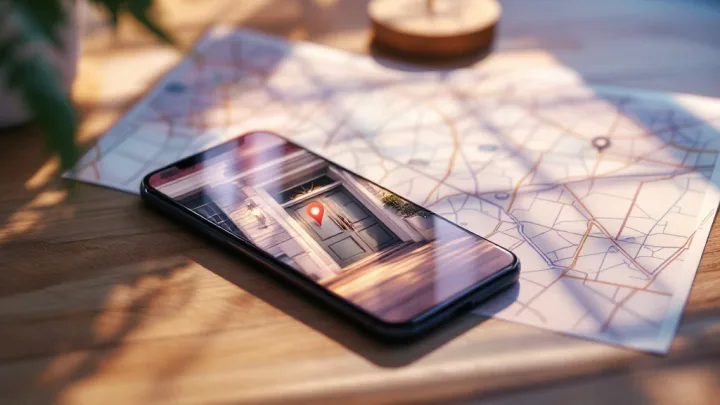
A perfectly sealed message can still hand over your home address, because smartphone photos carry GPS coordinates and device details inside the file itself. Here is what EXIF metadata in chat apps actually leaks, why end-to-end encryption does not remove it, and how to strip it before you send.
Hybrid post-quantum key agreement costs a phone far less than the raw algorithm comparisons suggest, because the expensive part runs once per session instead of once per message. Here is where the CPU time, latency and bytes actually go on Android, and how to check a performance claim yourself.
Livara runs the same hybrid post-quantum encryption on web and Android, so the ciphertext is identical — but the browser tab carries a threat surface the native app does not. Here is where each one is strong, and where each one loses.
Your keyboard sees what you type before end-to-end encryption ever applies. A practical look at third-party IME privacy on Android, what a keyboard can technically do with your chats, and how to pick one that does not read them.
End-to-end encryption protects messages while they travel and while they sit on a server as ciphertext. It cannot stop a screenshot, a screen recording or a lock-screen preview, because all three happen after the message has already been decrypted on someone else's device.
Android messenger session theft can expose an encrypted chat after the legitimate user has unlocked it. End-to-end encryption protects the message on its journey, but it cannot keep plaintext secret from malware that can read, capture or remotely control the authorised phone displaying it.
Discover why 'military-grade encryption' is a marketing illusion, and learn how to evaluate private messengers using transparent, verifiable cryptographic primitives.
Discover how hybrid post-quantum messaging protocols use ML-KEM-768 prekey bundles to maintain forward secrecy even when your contact remains offline for weeks.
A detailed technical comparison between the IETF Messaging Layer Security (MLS) tree-based ratchet and Livara's hybrid post-quantum LGS1 sender-key architecture.